9.2
Curated shortlist
BestShopWordPressThemes
Whether you're launching a boutique store or scaling a high-volume catalog, choosing the right WooCommerce theme shapes every customer's first impression. Our editorial team assessed nine leading options based on sales volume, verified buyer ratings, update frequency, and fit for real-world shop requirements. This list is for site owners who want a reliable, feature-complete foundation — not a blank canvas that demands weeks of custom development.
- 15
- Ranked picks
- 8.8
- Avg editorial score
- $39–$99
- Price range
- 2.3M
- Combined sales
Ranked by our editorial rubric · updated
9.1
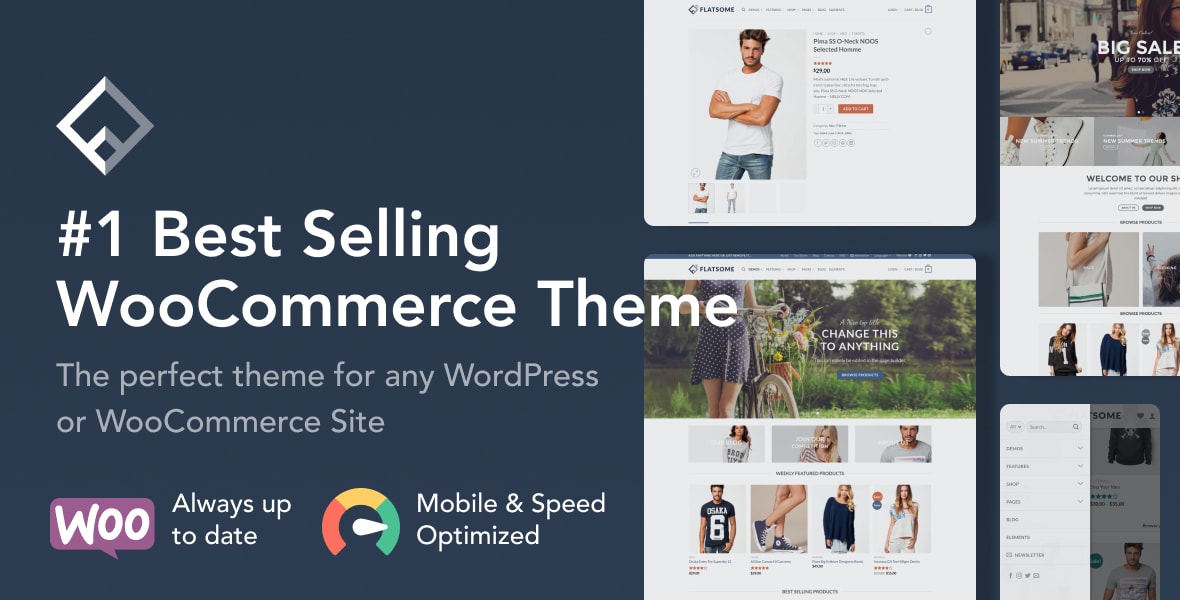
Flatsome is purpose-built for WooCommerce, not adapted from a generic multipurpose base. Its UX Builder is fast and shop-focused, and the theme's 268,600 sales make it the most battle-tested WooCommerce option on this list. It's the strongest pick for store owners who want deep cart and product-page control without hiring a developer. The trade-off: the proprietary builder limits portability if you later switch themes.
Read our review9.1
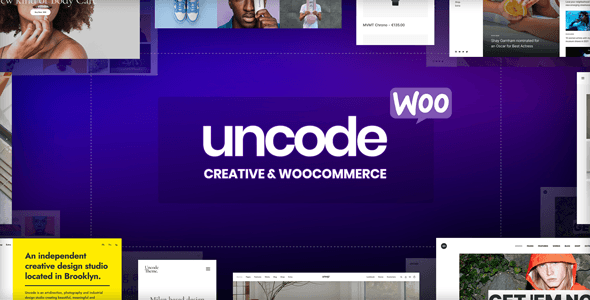
Uncode earns the highest rating on this list (4.89/5 across 3,500 reviews) and stands out for editorial-quality grid layouts that suit fashion, design, and lifestyle brands selling through WooCommerce. Its pixel-grid system gives designers precise control over product presentation.
Best forcreative stores where visual storytelling drives conversions. Buyers should note its design sophistication comes with a steeper learning curve than more utilitarian shop themes.
Read our review9.1
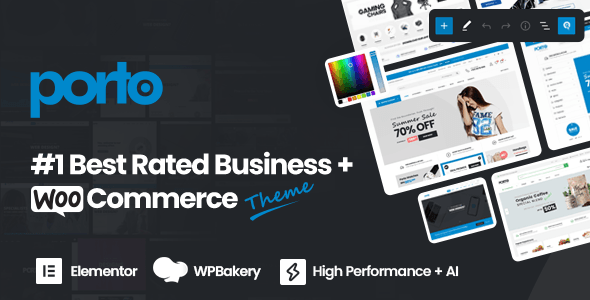
Porto carries the top average rating here (4.92/5) and combines a mature shop feature set with an AI-assisted site-building layer. It's well-suited to mid-to-large WooCommerce catalogs needing flexible product filtering, multiple header styles, and fast-loading templates. With over 102,500 sales, the author support ecosystem is well established. The wide feature scope means initial setup takes time, so budget for a learning period.
Read our review9.0
Avada is the best-selling premium WordPress theme ever, with over 1,066,100 sales and 26,600 reviews — marketplace scale no other theme approaches. Its Fusion Builder handles everything from landing pages to WooCommerce storefronts.
Best foragencies or power users who need one theme to cover many project types. At $69 with that support infrastructure, value is clear; the main downside is a heavier interface that can feel overwhelming for solo store owners.
Read our review9.0

8.6
JupiterX offers tight Elementor integration and a header/footer builder that gives shops precise branding control without custom code. With 184,000 sales it has a large user base, and WooCommerce templates are included from the start. It's a strong fit for agencies building client stores in Elementor. The 4.76/5 rating — slightly lower than peers — reflects some historical complexity in its update and licensing model worth researching before purchase.
Read our review8.9
8.8

Salient pairs polished animated layouts with solid WooCommerce integration, making it a practical choice for lifestyle and creative product brands. Its 170,300 sales and strong 4.81/5 rating signal reliable author maintenance. The theme's scroll-animation features add presentation flair without requiring extra plugins. It's less ideal for large catalogs needing advanced filtering, where a more shop-native theme like Flatsome or Porto would serve better.
Read our review8.5
Brooklyn's strength is its collection of visually distinct concepts suited to boutique and creative e-commerce brands. The $69 price point and 52,600 sales position it as a credible choice for style-forward single-category shops. Design flexibility is a genuine highlight. However, its 4.70/5 rating — the lowest on this list — and smaller sales volume suggest buyers should review recent support threads to confirm the author's current response times meet their expectations.
Read our review8.8
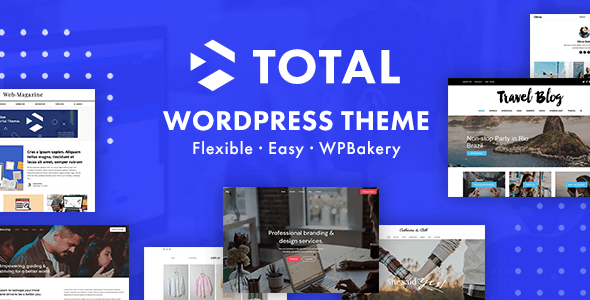
Total takes a modular approach — most features can be toggled off, which helps keep page weight down on shop builds that don't need every bell and whistle. Its 4.86/5 rating from 2,000 reviews reflects consistent quality and attentive support from WPExplorer.
Best forstore owners who prefer building lean. The smaller sales volume (58,300) means a smaller community knowledge base compared to the top tier of this list.
Read our review8.4

Phlox Pro is the most affordable option here at $39, and it delivers a genuinely competitive feature set including Elementor compatibility and WooCommerce-ready layouts. It's best suited to solo entrepreneurs or first-time store owners watching budget without sacrificing design quality. The trade-off versus pricier peers is a lower rating (4.66/5) and smaller sales base (50,500), so set expectations accordingly on community support depth.
Read our review8.8

8.7
8.7

How to choose
How to Choose a Shop WordPress Theme
A shop theme is not just a skin — it's a structural decision that affects page speed, conversion rate, and how much ongoing maintenance your site demands. Before committing, work through the following considerations.
WooCommerce integration depth matters more than demo count
Many multipurpose themes bolt WooCommerce on as an afterthought. Look for themes that ship with custom product-page layouts, cart and checkout styling, and dedicated shop widgets. The more WooCommerce-native the theme, the less you'll rely on additional plugins to fill gaps — and the fewer compatibility headaches you'll face after major WooCommerce updates.
Page builder lock-in is a real trade-off
Several themes on this list bundle a proprietary builder or are tightly coupled to Elementor. That gives you a polished editing experience out of the box, but it also means your content can be harder to migrate later. If long-term portability matters, prefer themes that keep content in standard blocks or that explicitly support the WordPress block editor alongside their native tools.
Performance baseline before you add plugins
Premium shop themes often load a large feature set by default. Check whether the theme lets you disable modules you don't need — lazy-loading, unused shortcodes, or bundled sliders are common culprits for bloated page weight. A theme with a clean performance baseline gives you more headroom once you layer in payment gateways, analytics scripts, and review tools.
Support and update cadence protect your investment
A theme with 100,000+ sales but infrequent updates is a liability. Prioritize themes whose authors have a consistent history of releasing compatibility updates alongside major WordPress and WooCommerce versions. Buyer review counts and sales trends in the marketplace are a practical proxy for author responsiveness — large, active communities mean more community-sourced solutions when you hit an edge case.
Common mistakes to avoid
- Choosing by demo aesthetics alone. Import demos rarely match your real content. Evaluate the underlying layout system and the quality of the shop-specific templates instead.
- Ignoring bundled plugin dependencies. Some themes require several premium plugins (included in the purchase) to replicate the demo. Understand what's bundled and what happens when those plugins update independently.
- Skipping the documentation review. Thin or outdated docs signal a theme that's harder to customize and maintain — check before you buy.
- Underestimating hosting requirements. Feature-rich multipurpose themes perform best on managed WordPress hosting with server-side caching. Shared hosting on a budget plan will blunt the experience for you and your customers.
Our bottom line
The themes on this list represent the strongest combination of shop functionality, community trust, and author commitment available in the premium marketplace today. Match the theme's strengths to your specific store type — whether that's a visually driven lifestyle brand, a large multi-category catalog, or a lean single-product shop — and you'll be well positioned for launch and beyond.
Questions, answered
How did you decide which shop themes made this list and how they were ranked?
Our editorial team scored each theme out of 10 based on verified marketplace data: sales volume, buyer ratings, feature set depth, and suitability for real shop use cases. We did not factor in paid placements. Scores range from 9.2 (Kalium) to 8.7 (Shopkeeper and Ronneby), reflecting meaningful differences in overall value rather than minor quibbles.
Which theme on this list is best for beginners with no coding experience?
Flatsome is the strongest beginner choice — its 268,600 sales make it the most battle-tested option on the list, and its built-in UX Builder is specifically designed for WooCommerce layouts without touching code. Avada (over 1 million sales) is another low-risk pick for first-timers thanks to its enormous community and documentation library. Both themes come in at $59–$69, making the entry cost relatively low.
When does it make sense to choose a runner-up over the top-ranked Kalium?
Kalium's $119 price tag is the highest on this list, which matters if budget is tight or you're managing multiple client projects. Flatsome, Uncode, and Porto all score 9.1 at $59 and cover the vast majority of shop use cases at half the price. Agencies building stores for clients may also prefer a higher-volume theme with a larger pool of community tutorials and third-party resources.
What price range should I expect for a quality shop theme, and does the license cover commercial use?
Eleven of the twelve themes here are priced between $49 and $69, with Kalium at $119 being the only outlier. All are sold as regular licenses on the marketplace, which covers a single end-product for one client or your own site — an extended license is required if you charge end users for access to the theme itself. Always verify license terms on the marketplace product page before purchasing.
Are all these themes fully compatible with the latest version of WooCommerce?
All twelve themes on this list are marketed as WooCommerce-compatible, and high sales counts — particularly Flatsome at 268,600 and Avada at over 1 million — indicate broad, ongoing real-world use that typically drives faster compatibility updates. That said, no theme can guarantee zero friction with every WooCommerce update the moment it ships; always check the changelog and the marketplace's last-updated date before upgrading a live store.
Which pick suits a minimalist or fashion-focused shop rather than a general catalog?
Savoy is purpose-built for lean, visually driven stores — its AJAX cart and minimalist design make it a strong fit for fashion, lifestyle, or single-brand shops. Ohio (4.85 rating) is another design-forward option built on Elementor for flexibility without sacrificing aesthetics. Both are priced at $59 but have smaller sales bases (16,800 and 22,300 respectively), so expect a smaller community compared to Flatsome or Avada.